Public health nurses not working in the child health and school health services – a cross-sectional study
Summary
Background: Public health nurses have an important responsibility in health promotion and preventive work with children, young people and families. Statutory public health nurse posts are linked to health promotion and preventive efforts in primary care and are essential to child health and school health services. Norway has a shortage of more than 2000 public health nurses, which challenges the principle of equal access to primary care.
Objective: The study maps how long public health nurses remained in their statutory posts within child health and school health services before leaving, where they work after leaving these posts, and why they changed jobs. This knowledge may be useful for employers and public health nursing education programmes in educating, recruiting and retaining nurses in these positions.
Method: This is a cross-sectional study using data from a questionnaire we devised on the basis of previous research, our experience from public health nursing, and collaboration with Public Health Nurses NSF (professional group for public health nurses within the Norwegian Nurses Organisation). The questionnaire was distributed by email to members of Public Health Nurses NSF and to its Facebook page. The Facebook post was shared, including within our own networks. Data were collected between November 2024 and January 2025. The sample consisted of 277 public health nurses who, at the time of the survey, were not employed in statutory public health nurse posts. Quantitative data were analysed using descriptive statistics, and free-text responses were qualitatively analysed using thematic analysis.
Results: A total of 20.9% (n = 57) of participants had worked in a statutory public health nurse post for eight to twelve years before changing jobs, while 28.7% (n = 78) worked in ‘other’ positions after leaving their statutory public health nurse post. Common reasons for changing jobs were a desire for new or different challenges (35.8%, n = 98), higher pay (24.8%, n = 68) or feeling isolated in their work (18.6%, n = 51). Thematic analysis of free-text responses resulted in the main theme ‘The tension between professional identity and structural conditions.’
Conclusion: To ensure adequate staffing and quality in child health and school health services, important measures may include strengthening public health nurses’ professional identity, improving structural conditions such as pay, and providing opportunities for career progression within child health and school health services.
Cite the article
Andersen R, Nedberg I, Laholt H, Clancy A, Hovden J. Public health nurses not working in the child health and school health services – a cross-sectional study. Sykepleien Forskning. 2026;21(104358):e-104358. DOI: 10.4220/Sykepleienf.2026.104358en
Introduction
Public health nurses are registered nurses with a specialisation in health promotion and preventive work with children, young people and families. Health promotion and preventive work involves a resource-focused approach, helping individuals gain control over and improve their health (1, 2).
The public health nursing programme is a master’s degree of 120 ECTS credits, with the possibility of completing 90 credits to achieve a recognised public health nursing qualification (3). Public health nurses primarily work in child health clinics (ages 0–5), school health services (ages 6–20) and youth health centres (ages 16–25) (4). These are all statutory, free, low-threshold primary care services (4, 5).
According to section 3 of the Regulations on Statutory Nursing Services, nurses with a recognised public health nursing qualification must be employed to carry out health promotion and preventive nursing in primary care (6). These positions are hereafter referred to as ‘statutory public health nurse posts’.
As there is no separate public health nurse licence, there is currently no national register of practising public health nurses in Norway. A system for specialist certification for public health nurses is under development (7). In 2021, the Norwegian Directorate of Health estimated that 4823 public health nurses were employed in Norway, of whom 4209 worked in health and social services (8). Approximately 13% worked in other sectors, mainly in education or public administration.
It is unclear how many of the 4209 public health nurses are employed in statutory public health nurse posts. It is estimated that there are just over 3000 full-time equivalents (FTEs) in child health and school health services. Public Health Nurses NSF (professional group for public health nurses within the Norwegian Nurses Organisation) reports that it has approximately 4000 members (8).
Norway has a shortage of more than 2000 public health nurses (9). Although the public health nursing programme receives a high number of applicants, recruitment into the occupation remains challenging (8, 9) due to the insufficient number of study places (9). It is therefore crucial to recruit and retain public health nurses in statutory public health nurse posts in primary care to meet the need for health promotion and preventive work with children, young people and families.
Background
Public health nurses report that the work is both challenging and meaningful (10, 11), and that they carry out their work with pride (11) and personal commitment (10). They value the predictability of work in child health clinics. However, they also find the unpredictable day-to-day work in school health services rewarding (11), partly because of the freedom to prioritise their own tasks (10). Public health nurses in school health services report a strong commitment and sense of responsibility in supporting and caring for young people (12, 13).
The occupation is described as complex and isolating (11, 13), with unclear boundaries (14), and previous research suggests that the role of the public health nurse is not sufficiently defined (15). The autonomous nature of the role often requires public health nurses to work alone and to be able to make and trust their own decisions (10). The number and complexity of their work tasks have increased (9), and they are expected to deal with cases that are difficult to define or resolve (16). Public health nurses encounter ethical dilemmas in their daily work, and they need more support and clearer frameworks (10).
Mæland et al. found that public health nurses in school health services in Norway remain in the occupation because of self-fulfilment, confidence in their professionalism, a sense of being valued and the capacity to safeguard their own well-being (17–19). International studies show similar findings and highlight the importance of autonomy, interaction (20, 21) and professional status (20).
A survey of 6000 members of NSF indicates that staffing shortages, dissatisfaction with pay, and psychological and physical strains are common reasons why nurses follow other career opportunities (22). Many who leave continue to work in relevant positions that contribute to professional development, patient safety and quality (23), or they work in administration, social services or education (24).
Objective of the study
We found no relevant studies focusing specifically on public health nurses. Public Health Nurses NSF has expressed a need for such studies. The objective of this cross-sectional study was to map how long public health nurses remained in statutory posts in child health and school health services, where they worked after leaving and the reasons for changing jobs. The findings may be useful for employers and public health nursing education programmes in educating, recruiting and retaining public health nurses in child health and school health services.
Method
This cross-sectional study combines quantitative and qualitative data collected through an anonymous questionnaire that we devised and administered. Quantitative data were analysed using descriptive statistics. Free-text responses were analysed thematically (26, 27) and served to elaborate on the quantitative findings.
Population and recruitment
The study population comprised nurses with a recognised postgraduate qualification in public health nursing who were not employed in a statutory public health nurse post as defined in section 3 of the Regulations on Statutory Nursing Services (6). Public health nurses in such posts or those outside the workforce receiving welfare benefits or pensions were excluded.
Participants were recruited when Public Health Nurses NSF shared information about the study and a link to the online questionnaire via email to its members. Posts were also shared on the group’s Facebook page on two occasions and were further circulated, including through the authors’ networks. Recruitment was therefore based on self-selection. Data were collected between November 2024 and January 2025.
Questionnaire
Data were collected via an online questionnaire administered through Nettskjema (25), a secure tool for gathering data electronically. No existing questionnaires were identified that could be used for this study. We therefore devised a new questionnaire based on previous research, as outlined in the Background section, our own experience and knowledge of public health nursing, and collaboration with Public Health Nurses NSF.
The board of Public Health Nurses NSF provided input on response categories for the question: ‘What are the reasons you no longer work in a public health nurse post?’
The questionnaire was not formally validated beyond a pilot study. The pilot study was conducted in September 2024 and involved seven public health nurses in the target population completing the questionnaire. They provided feedback on the relevance and clarity of the questions, as well as suggestions for question formulation, response categories and questions to add.
Following the pilot study, minor adjustments were made. The target population and purpose of the questionnaire were clarified. Response categories were added to the question regarding reasons for leaving a public health nurse post, along with a free-text question asking what would be needed for participants to return to such a post.
Variables
The questionnaire began with a screening question asking whether the participant was a public health nurse in a statutory public health nurse post, followed by background questions on age, region, level of education, and experience in nursing and public health nursing. Participants were then asked about their professional experience as a public health nurse, reasons for no longer working in a public health nurse post, and whether returning to the occupation was a possibility, with the option to provide free-text responses.
Analysis
We analysed quantitative data descriptively using SPSS version 29 and presented this in frequency tables and bar charts. These data were supplemented with qualitative data from the free-text responses to questions about reasons for changing jobs and what might encourage a return to a statutory public health nurse post. Free-text responses were analysed thematically using Braun and Clarke’s approach (26, 27).
Research ethics considerations
Participants were given information about the purpose of the study and the estimated time needed. They were also informed that participation was voluntary and anonymous. Consent was implied by completing the questionnaire. Participants were notified that it would not be possible to withdraw from the study after submitting the questionnaire, as the study was anonymous and IP addresses were not recorded. They were also informed that they could skip any questions they did not wish to answer.
When designing the questionnaire, precautions were taken to avoid the risk of indirect identification of individuals through combinations of variables, known as re-identification (28). Variables such as gender and doctoral degree were omitted, as few in the population were men or held a doctorate. Since neither direct nor indirect personal data were collected, Sikt – The Norwegian Agency for Shared Services in Education and Research assessed that the study was not subject to reporting (reference number 518759).
Results
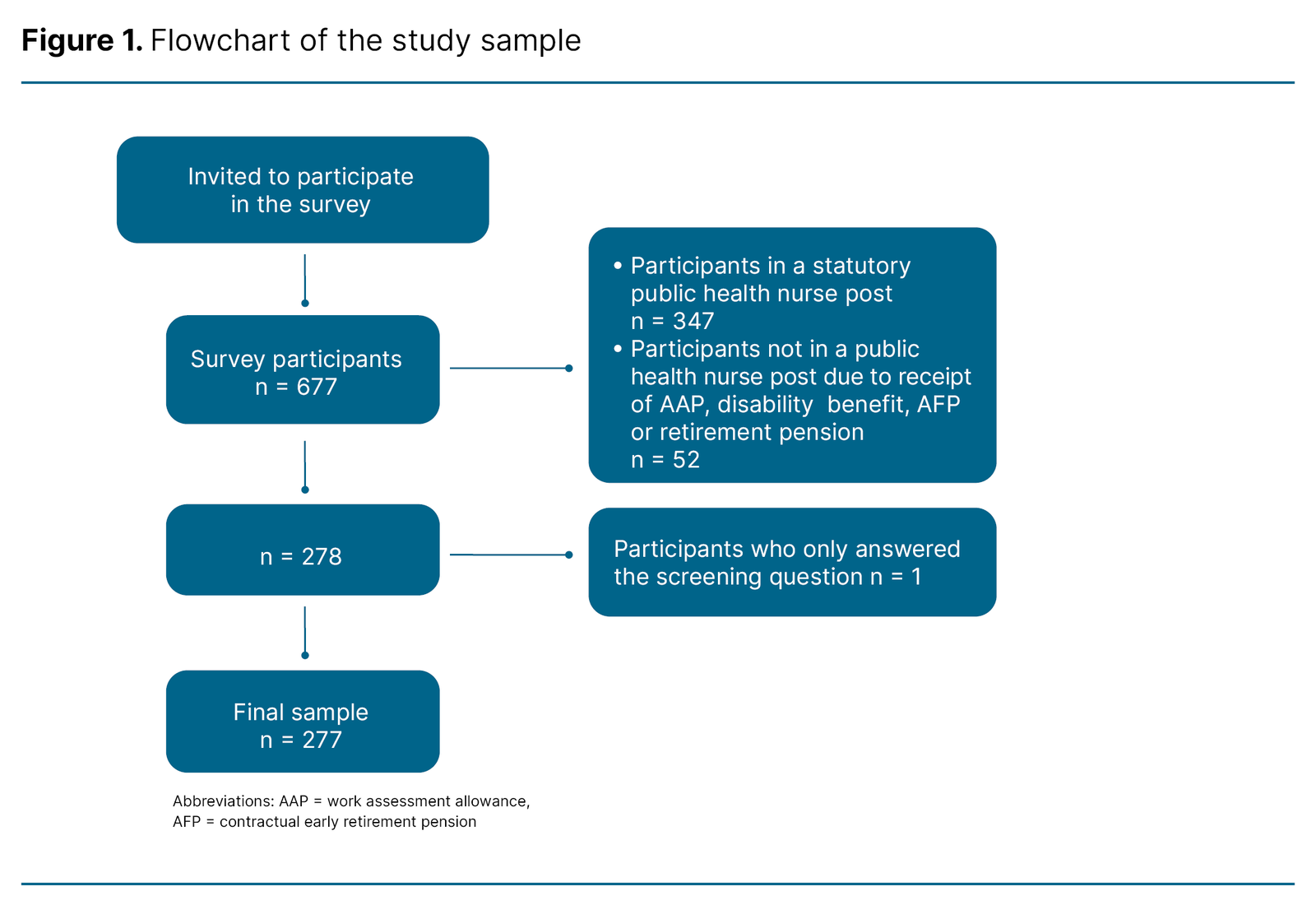
The questionnaire received a total of 677 responses. It was also completed by public health nurses who were still employed in statutory public health nurse posts in child health and school health services, as well as by public health nurses who had left these positions, were receiving welfare benefits or a pension. However, these respondents were excluded based on the screening question in the questionnaire.
Of the participants who completed the questionnaire, 278 were in the target population for the study (41.1%) and reported that they were not employed in a statutory public health nurse post as defined in section 3 of the Regulations on Statutory Nursing Services (6). One participant only answered the screening question and was therefore excluded. The remaining 277 participants were included in the study and formed the basis for the analyses (Figure 1).
Background characteristics
Table 1 presents the demographic data for the participants.
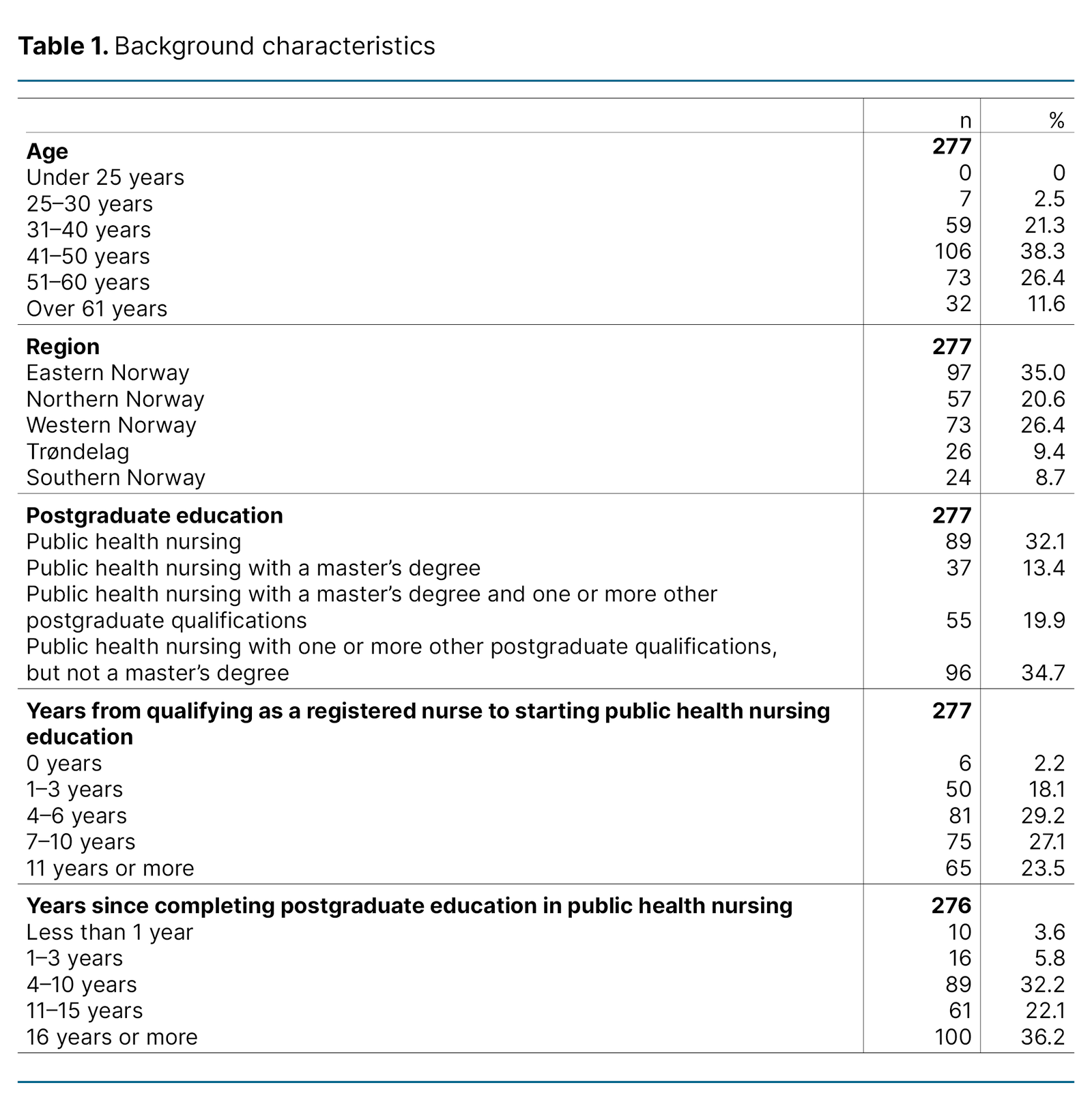
The largest proportion of participants (38.4%, n = 106) were aged 41–50 years, while few were under 30 years (2.5%, n = 7). Participants represented all regions of Norway, with the most from Eastern Norway (35%, n = 97) and the fewest from Southern Norway (8.7%, n = 24). The majority (34.7%, n = 96) had completed a postgraduate qualification in public health nursing combined with other postgraduate studies, but without a master’s degree.
Only 2.2% (n = 6) had no work experience as a registered nurse before completing the public health nursing programme, while the largest proportion (29.2%, n = 81) had four to six years of nursing experience prior to the public health nursing qualification. The largest group (36.2%, n = 100) had completed their public health nursing education at least 16 years ago.
Professional experience
Table 2 shows the number of years participants spent in a statutory public health nurse post before changing jobs, the positions they held, and the parts of the public health nursing service in which they had work experience.

The largest proportion of participants (20.9%, n = 57) had worked eight to twelve years in a statutory public health nurse post before changing jobs. The most common type of work after leaving (28.7%, n = 78) was reported as ‘other’. In relation to child health and school health services, where multiple responses were possible, most participants had experience in school health services (74.7%, n = 204).
When asked whether returning to a statutory public health nurse post in a child health clinic, the school health service or a youth health centre might be a possibility in the future (n = 275), the largest proportion (37.1%, n = 102) responded that they did not know.
Reasons for changing jobs
Figure 2 shows the various reasons participants no longer worked in a statutory public health nurse post. Participants could select up to three response categories, so the figure is based on a total of 587 selected responses from 274 of the participants.
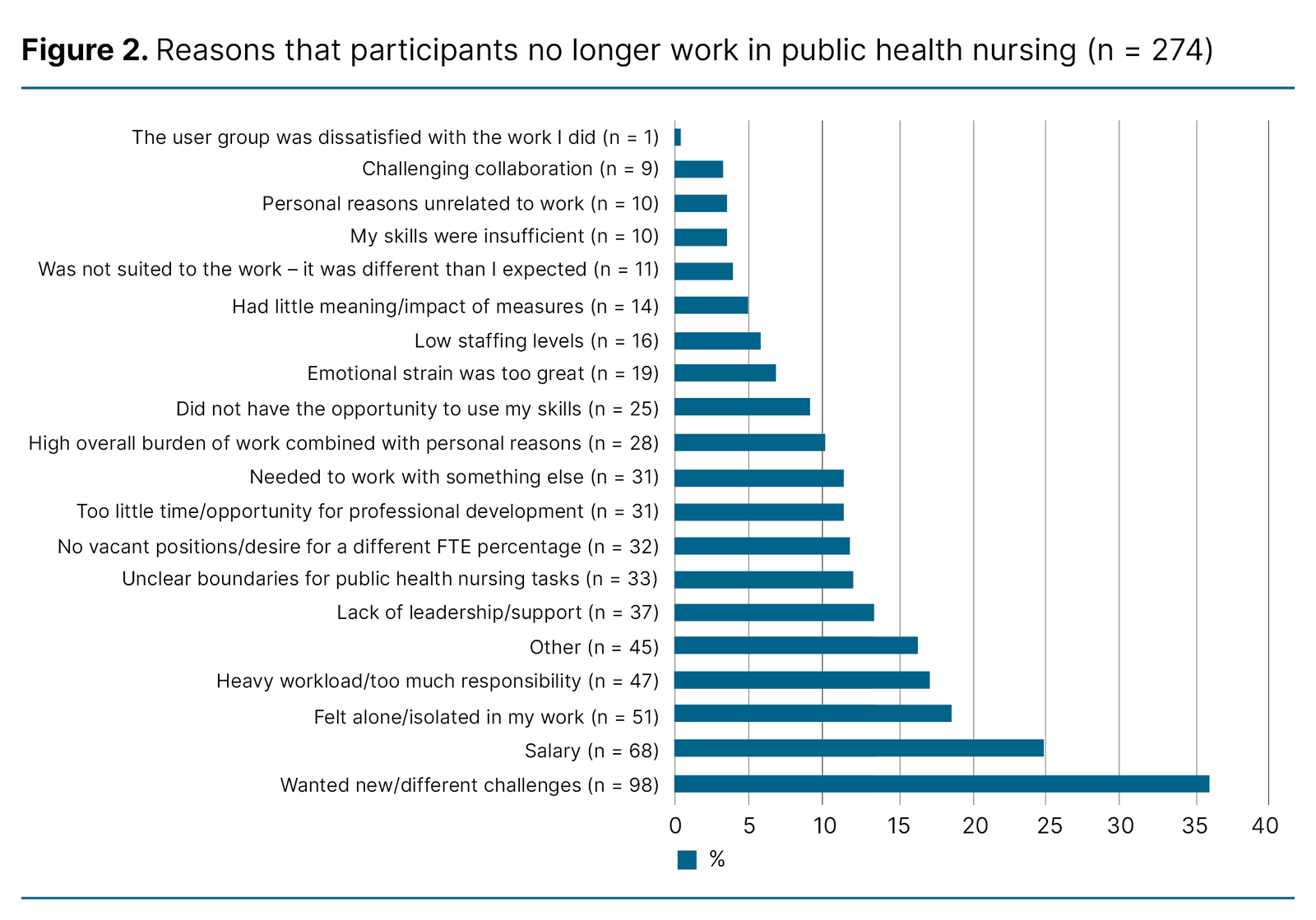
The most frequently reported reason was a desire for new or different challenges, chosen by 35.8% (n = 98) of participants. A further 24.8% (n = 68) cited pay as a reason, while 18.6% (n = 51) reported feeling isolated or alone in their work. Heavy workload or too much responsibility was reported as a reason by 17.2% (n = 47) of participants.
Among other reasons, some participants reported that they were unable to use their skills (9.1%, n = 25), that their skills were insufficient for the demands of the role (3.6%, n = 10), or that the overall burden from the combination of work and personal responsibilities was too high (10.2%, n = 28). The results indicate that participants cited both personal and structural factors as reasons for no longer working in a public health nurse post.
Thematic analysis of free-text responses
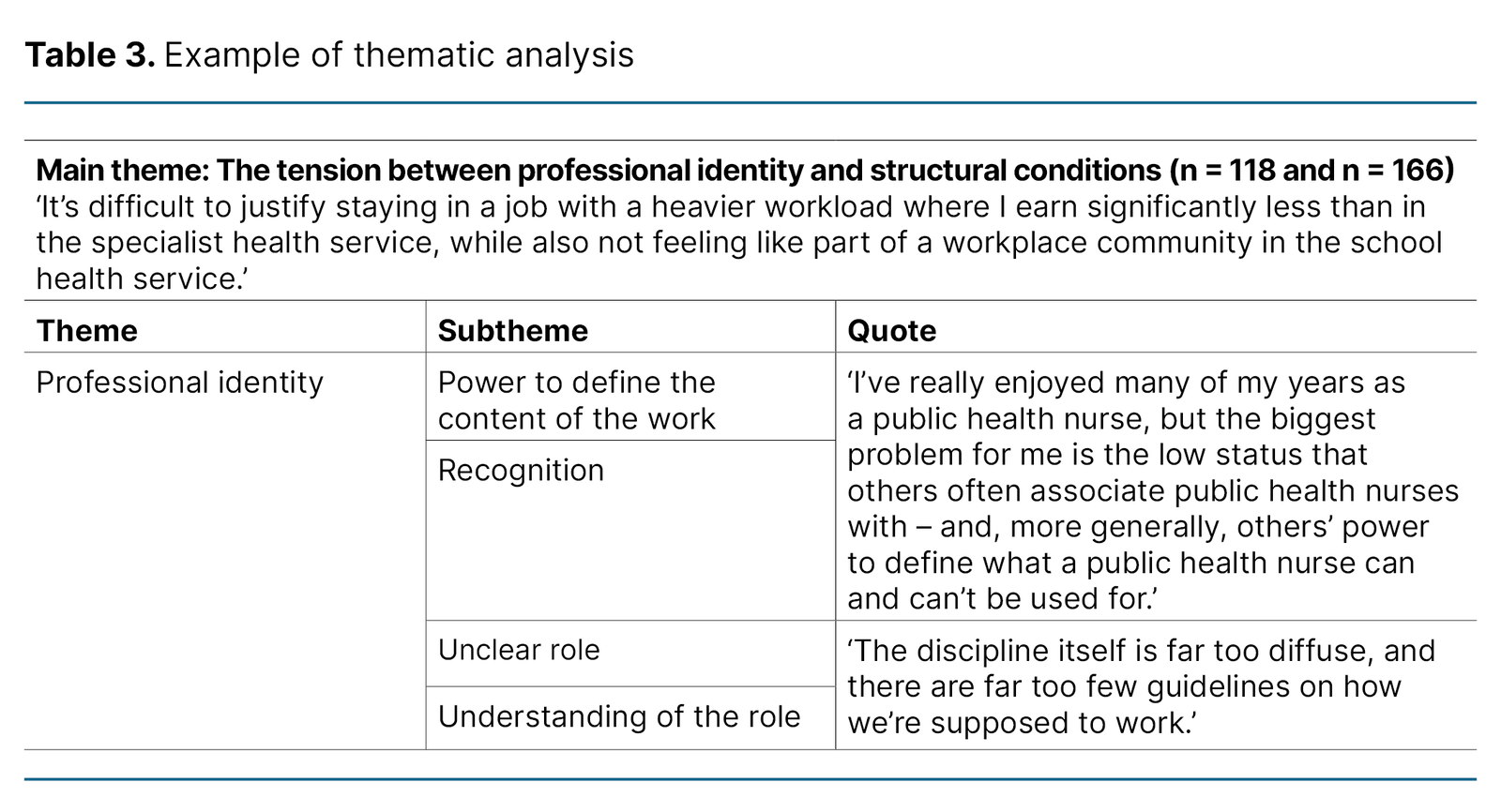
The thematic analysis of free-text responses regarding reasons for not working in a statutory public health nurse post (n = 118) and what might encourage a return to such a post in the future (n = 166) resulted in the main theme: ‘The tension between professional identity and structural conditions’ (Table 3). This theme reflects participants’ descriptions of the conflict between their understanding of their professional role and the external conditions that impacted on their work.
Professional identity is challenged when other occupations or organisations hold the power to define the content of the work. This can be exacerbated by the perception of the occupation as low-status due to pay levels and lack of recognition of specialised competence. This tension is further impacted by limited resources and organisational structures that cause high work pressure and restrict opportunities for professional development or career progression.
Many participants described how resource shortages and cumbersome bureaucratic systems reduced the quality of services and led them to seek alternative career opportunities. They also characterised public health nursing as isolating and emotionally challenging, with a lack of support and guidance when facing complex and stressful cases. Collectively, these factors create a tug-of-war between public health nurses’ professional ideals and the structural constraints that can limit their ability to fulfil their role as they would like.
Discussion
The main findings show that public health nurses’ decisions to change jobs are influenced by a perceived tension between their professional identity and the structural conditions of their daily work. The desire for new challenges and higher pay, and isolation or heavy workloads emerged as key reasons for leaving. The discussion links our findings to previous research, highlights implications for clinical practice, addresses the study’s strengths and limitations, and suggests future research.
Professional identity
The findings show that even though many participants in the study (36.2%, n = 100) reported having extensive experience (16 years or more since completing the public health nursing programme) and a strong professional identity, structural and organisational factors can challenge their decision to remain in a statutory public health nurse post.
In free-text responses, participants described a professional commitment and a desire to fulfil their role in accordance with their own values. They also reported that external factors, such as low staffing levels, unclear role expectations and lack of recognition restricted their ability to act. This finding aligns with the studies by Mæland et al. (17–19), which highlighted the role of professional confidence and the sense of feeling valued in retaining public health nurses in school health services.
The remit of public health nurses includes health promotion and preventive work (4). This is juxtaposed with a strong personal and professional responsibility to safeguard the health and rights of children and young people (10–13). In the free-text responses of this study, participants described their work as meaningful, but also challenging.
Several responses indicated that participants were unable to fulfil the role in accordance with their own values and professional judgment, and that this was a reason for leaving the occupation. The findings suggest a disconnect between the structural conditions and participants’ ability to work in accordance with their professional ideals.
Previous research shows that when professional practice is not supported by structural conditions, such as adequate staffing, clear guidelines and a professional community, the responsibility can lead to nurses leaving the occupation (9, 10, 12). Dahl’s findings also indicate that limited resources affect how public health nurses prioritise person-centred work over group- or population-based work (15).
New challenges
A desire for new or different challenges was cited as a reason for changing jobs by 35.8% of participants (n = 98). In free-text responses, participants explained that they had chosen positions that offered better opportunities for professional development and career progression. This finding is consistent with studies showing that nurses who leave often move into roles within professional development, patient safety and quality improvement work (23).
The study’s findings suggest that current conditions in child health and school health services are not particularly conducive to professional growth. To retain public health nurses, it may therefore be important to better facilitate such development. Some participants also reported that the quality of their professional practice influenced their decision to leave, either because their skills were insufficient for the demands of the role (3.6%, n = 10) or because they were unable to use their skills (9.1%, n = 25).
Pay and low status
Pay was frequently reported (24.8%, n = 68) as a reason for leaving statutory public health nurse posts. This aligns with research indicating that salary is an important factor in nurses’ career choices (22). Low pay relative to workload and responsibilities may make the occupation seem less attractive. Free-text responses also highlighted the low status of the post as a challenge.
These findings underline the need to increase pay levels and strengthen recognition of public health nurses’ expertise and status. The introduction of specialist certification for public health nurses (7) may be an important measure for clarifying their role as specialists with advanced knowledge and skills in health promotion and preventive work with children, young people and families. Specialist certification may also increase understanding of public health nurses’ work among the public, collaboration partners and decision-makers.
Isolation in the role
Feeling alone or isolated in their work (18.6%, n = 51) and a heavy workload or too much responsibility (17.2%, n = 47) were among the most frequently reported reasons for changing jobs in the multiple-response question. Public health nurses often work alone, particularly in school health services (13).
Previous research shows that they see themselves as autonomous professionals responsible for making their own decisions in complex and often unpredictable situations (29).
Autonomy is a key aspect of public health nurses’ professional identity and is a source of both pride and stress (10, 28). Nurses report that good relationships and teamwork are important motivators for remaining in the occupation (30), while participants in our study indicated that isolation in the role (18.6%, n = 51) and lack of collegial support (13.5%, n = 37) were reasons for leaving. This difference may reflect organisational factors, as public health nurses in Norway often work autonomously and, at times, alone (31), whereas nurses in other settings (30) tend to work in teams.
Implications for clinical practice
Although 28.4% of participants (n = 78) in the study did not wish to return to a public health nurse post, 34.5% (n = 95) considered it a possibility, and 37.1% (n = 102) were unsure. This suggests potential for recruiting nurses back into the occupation.
The findings indicate that, to recruit and retain public health nurses in statutory posts, it may be useful to implement measures that address both professional identity and structural conditions. A clearer understanding of the role, in which public health nurses’ tasks and responsibilities are defined by authorities and educational programmes, could be beneficial. Public health nursing education could place greater emphasis on confidence in and understanding of the role in order to prepare newly qualified public health nurses for the challenges of daily practice.
Increased staffing and sufficient resources to support health promotion and preventive work may also have a positive impact. In addition, it may be important to facilitate professional development within public health nursing. Measures that promote collegial support and reduce feelings of isolation in the role may also be significant. Competitive pay that reflects the workload and responsibilities could make the occupation more attractive.
Strengths and limitations of the study
We were unable to calculate the response rate because we lacked data on the total population, as there is no dedicated registration system or national register for public health nurses. Recruitment was based on members of Public Health Nurses NSF and followers of the group on Facebook. This approach represents a limitation of the study, as it excluded public health nurses who were not members of Public Health Nurses NSF or did not follow the group on Facebook.
It is unclear how many of the public health nurses who leave statutory public health nurse posts maintain membership in Public Health Nurses NSF. The Facebook post was shared by the group’s members and through our own networks, which may have helped reach more participants in the target population. The study used a non-probability, self-selected sample, meaning little is known about those who did not participate. This limits the generalisability of the findings.
We used a self-developed questionnaire that was not validated. Using a self-developed questionnaire that has only been pilot-tested may limit both its validity and reliability, which could affect the quality of the data and the generalisability of the findings.
We conducted a pilot study as a first step in the validation process. This approach is a strength of the study, as it provided a basis for further developing and refining the questionnaire. Further research focusing on validating and improving the questionnaire through more extensive testing and theoretical grounding could strengthen the instrument and enable more reliable results.
The questions in the questionnaire were optional. As a result, some questions were not answered by all participants, which reduced the sample size for certain variables. For transparency, we have specified ‘n=’ for each variable. If participants who did not answer certain questions differed systematically from those who did, this may have resulted in selection bias. As the survey was anonymous, duplicate responses may have occurred, although these are unlikely to have affected the results to any meaningful degree.
Conclusion
The aim of the study was to map how long public health nurses remained in statutory public health nurse posts in child health and school health services before leaving, where they worked after leaving these positions, and the reasons for changing jobs.
The main findings show that the majority of participants in the study had worked in statutory public health nurse posts for between eight and twelve years before changing jobs. Their decisions to leave were influenced by a perceived tension between their professional identity and the structural conditions of daily practice. A desire for new challenges, higher pay, a sense of isolation or heavy workload emerged as key reasons for changing jobs.
To ensure adequate staffing and quality in child health and school health services, it may be necessary to implement measures that strengthen professional identity, improve structural conditions and increase recognition of public health nurses’ expertise.
Longitudinal studies could be used to investigate public health nurses’ career decisions over time. Studies exploring the relationships between the factors highlighted in this cross-sectional study may also provide valuable insight.
Acknowledgements
We would like to thank Ann Karin Swang, Jorunn Grøndalen and the national board of Public Health Nurses NSF for their ideas, contributions to the response categories in the questionnaire on reasons for leaving, and assistance with recruitment. We also extend our thanks to those who contributed to the pilot study and the participants in the final survey.
The authors declare no conflicts of interest.
Open access CC BY 4.0
The Study's Contribution of New Knowledge


Comments