Supporting family caregivers in home deaths – community nurses’ experiences
Summary
Background: Approximately 14% of deaths in Norway occur at home, and several national clinical guidelines set out how to facilitate home deaths. Family caregivers often face challenging situations and need help to provide care for patients who will die at home. For patients and family caregivers to feel reassured, they need knowledge and consistent follow-up from home care services. Research shows that family caregivers often feel uncertain and that many community nurses report feeling inadequate and professionally isolated.
Objective: The objective of this study was to explore nurses’ needs when supporting family caregivers of patients wishing to die at home.
Method: A qualitative design was employed, based on three focus group interviews with a total of 12 nurses from different departments in home care services. The data were analysed using Braun and Clarke’s reflexive thematic analysis.
Results: The analysis generated three main themes describing community nurses’ experiences of which factors are important for supporting family caregivers: 1) Support from colleagues, 2) Facilitation by management and 3) Professional scope for action.
Conclusion: Family caregivers of patients who wish to die at home often carry a considerable caregiving burden. In order to support them, nurses need sufficient time, collegial support and organisational structures that facilitate relationship-building and collaboration. The findings reveal a clear gap between policy intentions and actual professional scope for action, which is something that should be communicated to employers and decision-makers.
Cite the article
Meyer L, Oksholm T, Fjørtoft A. Supporting family caregivers in home deaths – community nurses’ experiences. Sykepleien Forskning. 2026;21(105141):e-105141. DOI: 10.4220/Sykepleienf.2026.105141en
Introduction
More than 40,000 people die in Norway every year, with around 14% of deaths occurring at home. Approximately 6% of deaths are planned home deaths, meaning that a substantial number of family caregivers are involved (1–4). Care provided by family members and other loved ones represents an important societal resource and is a prerequisite for a home death (4–7). Family caregivers are key collaboration partners for the community nursing service when patients wish to remain at home for as long as possible and die at home (4–7).
National policy documents place an emphasis on the contribution of family caregivers, and several white papers describe them as an essential resource that should be supported and included in care planning (8, 9). The national action plan for palliative care in cancer patients states that family caregivers should be offered individually tailored support, respite care, follow-up and guidance (3). A family caregiver guide has also been developed for healthcare personnel (10).
Research shows that family caregivers feel a strong sense of responsibility and often worry about not adequately fulfilling their role. They need emotional, psychosocial and practical help and support (11–15). The unpredictable nature of the situation often leaves family caregivers feeling isolated and torn between the desire to help their family member and the need to protect themselves from stress and emotional strain (16).
Some family caregivers take on complex tasks without sufficient training or support from healthcare personnel (11, 16). They need information and guidance, and continuity in services is essential to their sense of reassurance (3, 11, 15–18). It is crucial that healthcare personnel have sufficient time for family caregivers (10, 15–17, 19, 20). Family caregivers’ need for advance care planning and conversations when a patient’s life expectancy is short is strongly emphasised in the Norwegian Directorate of Health’s national clinical guidelines (21).
Nurses play an important role in supporting family caregivers and patients during the end-of-life phase, which is often challenging (22, 23). Time constraints affect the quality of nursing care and can result in nurses feeling inadequate and experiencing moral distress (19). Nurses report increasing workloads and less time to carry out their work (23). Improvements are needed in the organisation of home care services and interdisciplinary collaboration, and nurses require both professional and personal support in their work with family caregivers (17).
To facilitate end-of-life care at home, family caregivers must feel reassured, which requires sufficient numbers of competent healthcare personnel (3). Despite national policy directives, research suggests a gap between what family caregivers need and what home care services are able to provide (3, 11–18). Bridging this gap requires further insight into nurses’ experiences and how family caregivers can be adequately supported.
Objective of the study
The objective of the study was to explore the needs of nurses in supporting family caregivers of patients wishing to die at home.
Method
The study employed a qualitative descriptive design, using focus group interviews to capture participants’ individual experiences (24). The data were analysed using Braun and Clarke’s reflexive thematic analysis (25).
Participants
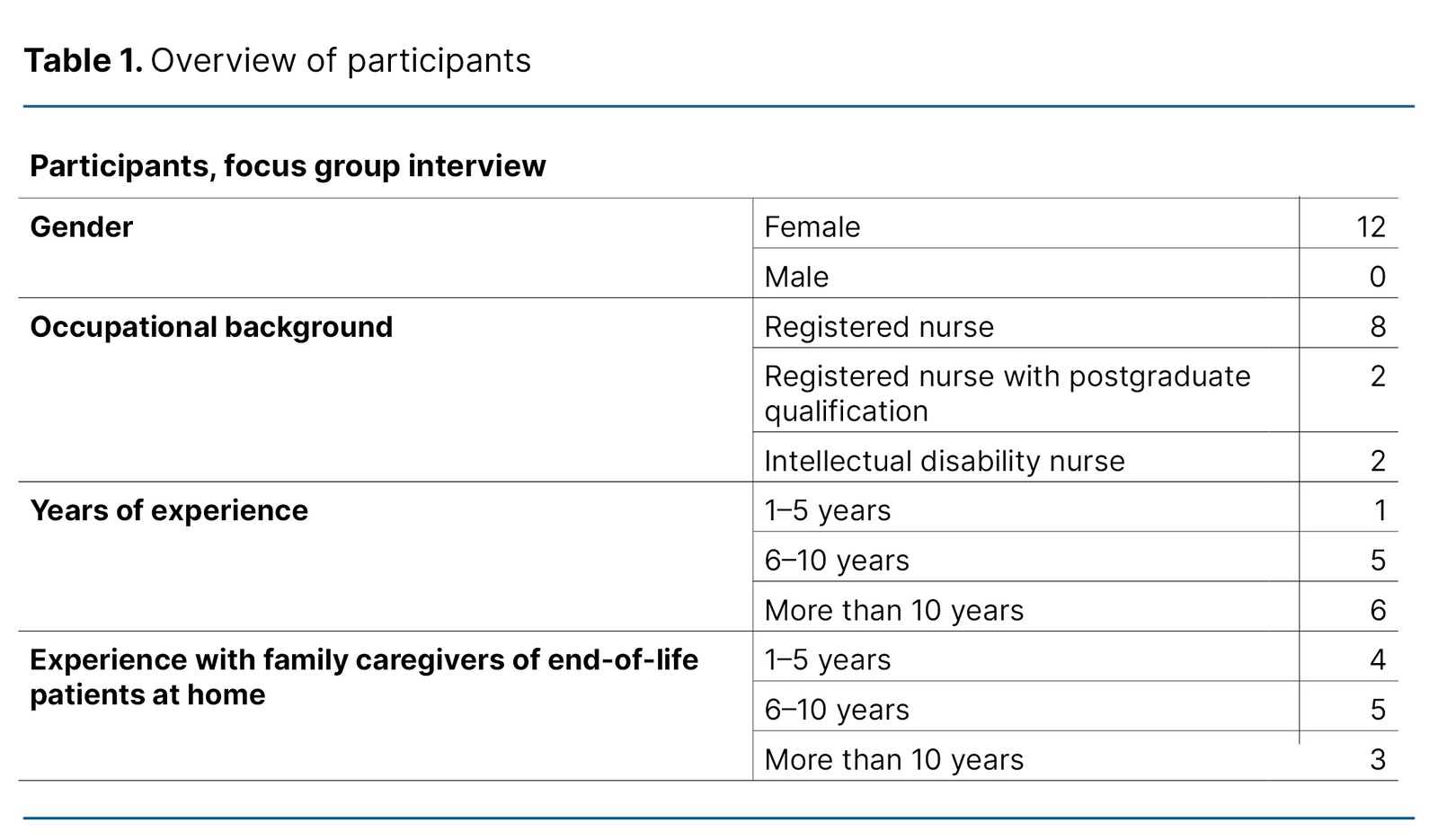
The study was conducted in a municipality in Western Norway in autumn 2023. Participants were recruited by departmental managers from three different departments in the community nursing service (Table 1). The departmental managers were contacted by telephone by the first author and informed about the project. They were then sent written information to familiarise themselves with the study and to send to potential participants.
The inclusion criteria were nurses working in home care services who had experience of supporting family caregivers of patients wishing to die at home. Two intellectual disability nurses also participated in the study but are referred to as nurses throughout the article as they performed similar tasks and had the same responsibilities as nurses in clinical practice.
Data collection
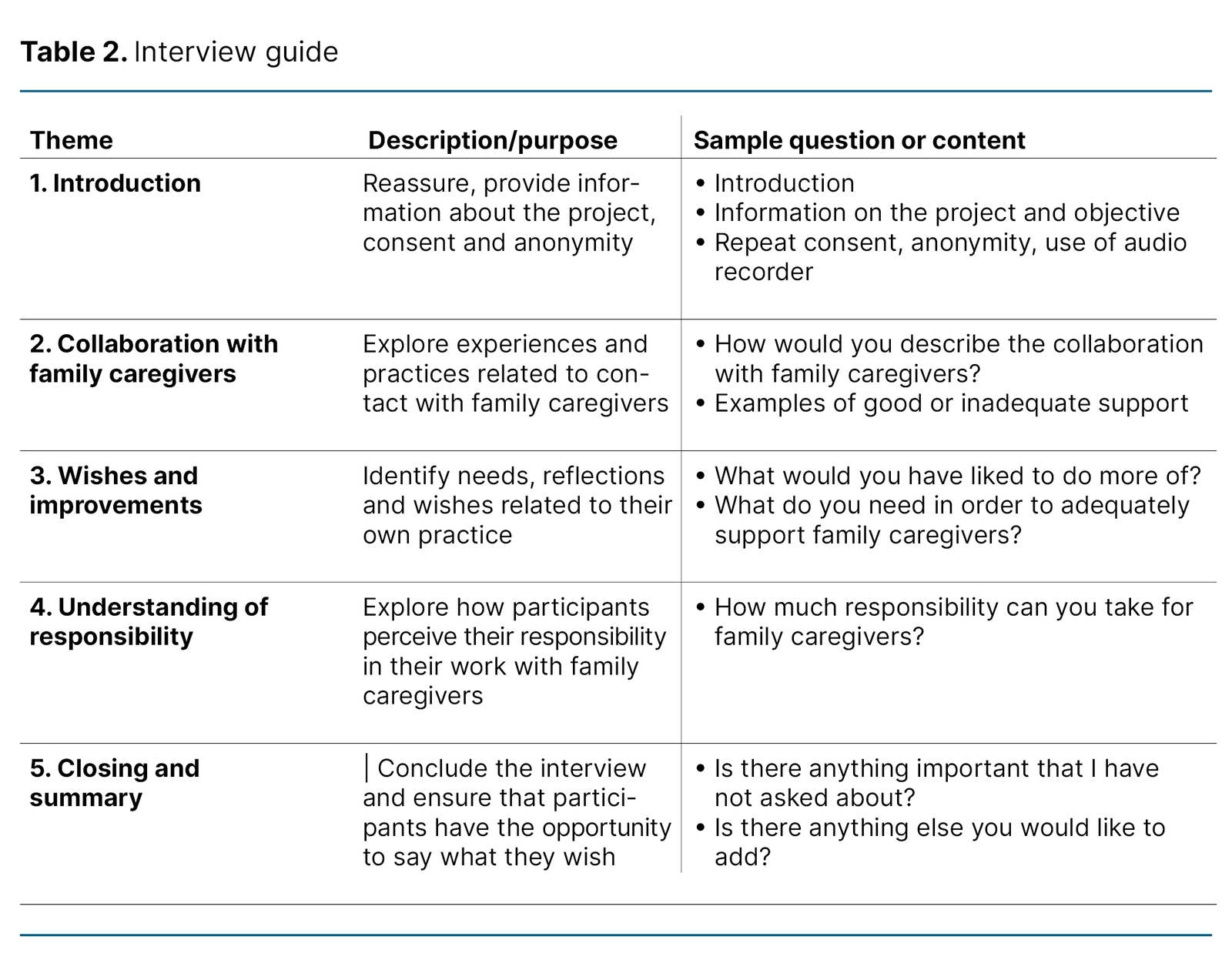
The study is based on empirical material from three focus group interviews with three, four and five participants respectively. The first author conducted the interviews at the participants’ workplace in order to create a sense of security. The interview guide was developed based on previous research (Table 2).
The questions related to nurses’ experiences of collaborating with and following up family caregivers, as well as nurses’ own needs for meeting the needs of family caregivers. The interviews lasted 70–75 minutes and were audio-recorded. The first author took reflexive notes during the interviews and transcribed these afterwards.
Analysis
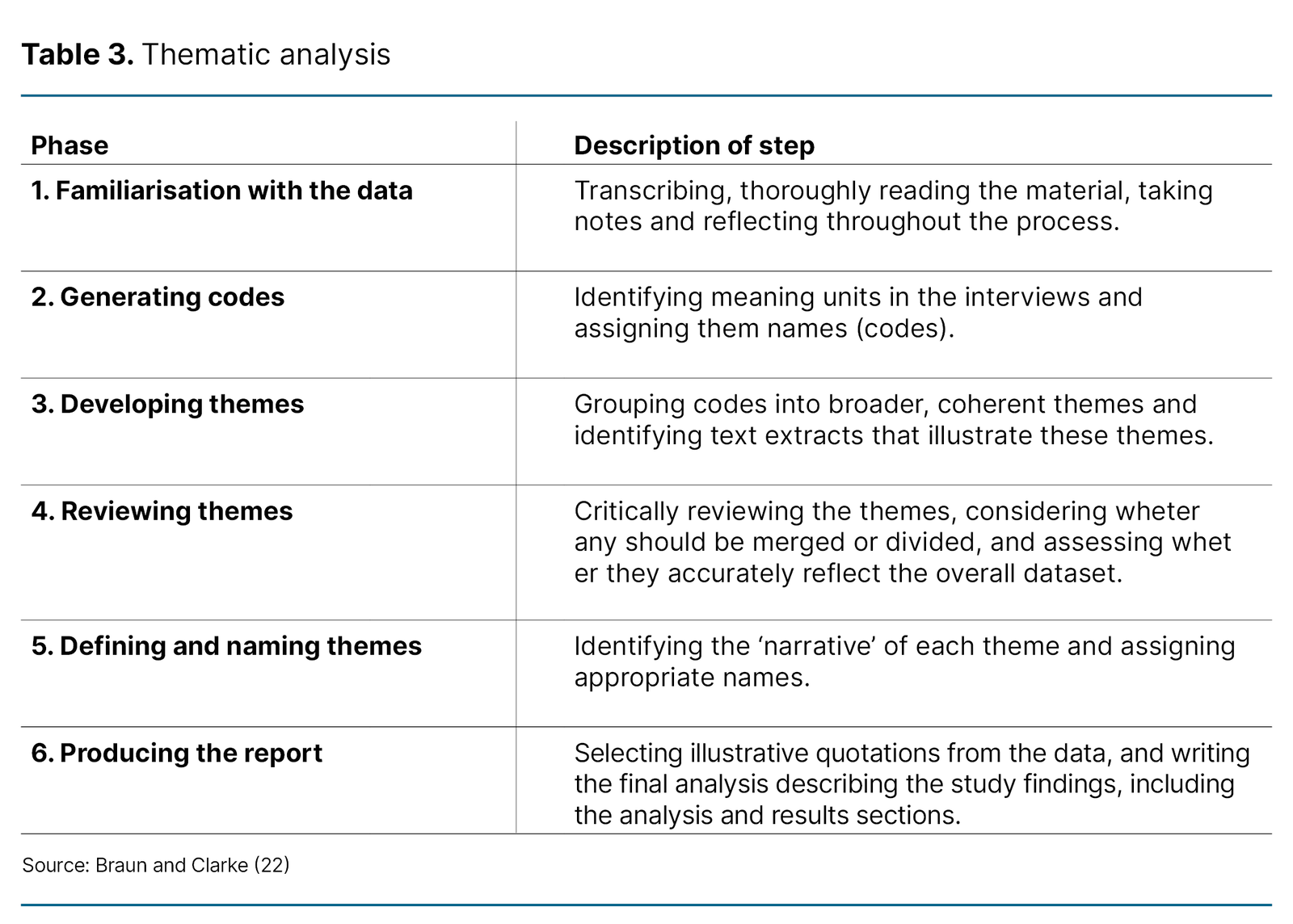
Braun and Clarke’s reflexive thematic analysis (Table 3) is a method for identifying, analysing and reporting patterns in data, which helps to organise, describe and interpret various aspects of a research topic (26). The analysis was conducted and discussed by all authors to ensure a thorough and nuanced interpretation of the data material (25).
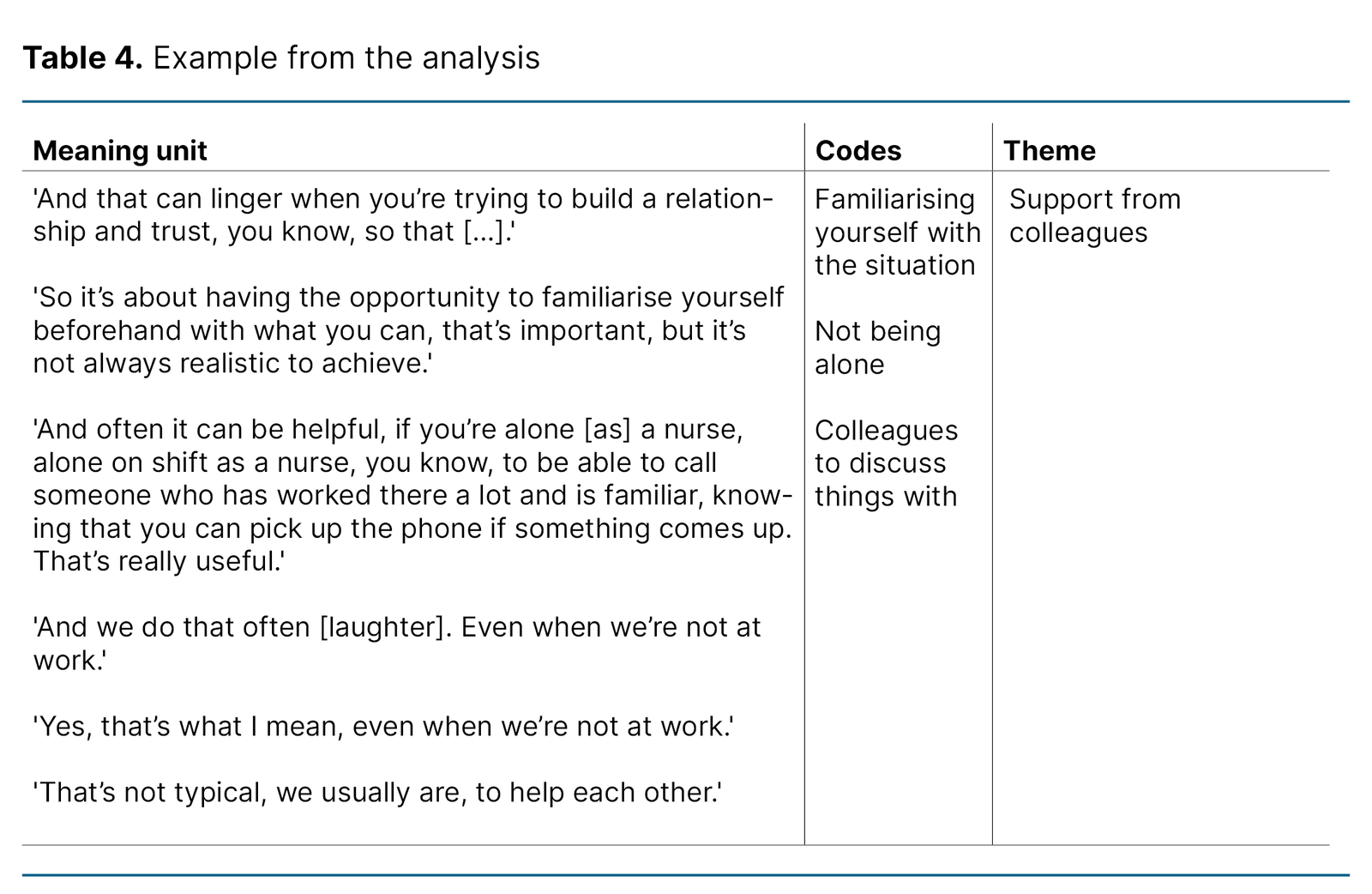
The interviews were read several times to form an overall understanding of the content. The content was then discussed, and the text was analysed to identify similarities and differences. The text was organised in a table where codes were identified (Table 4).
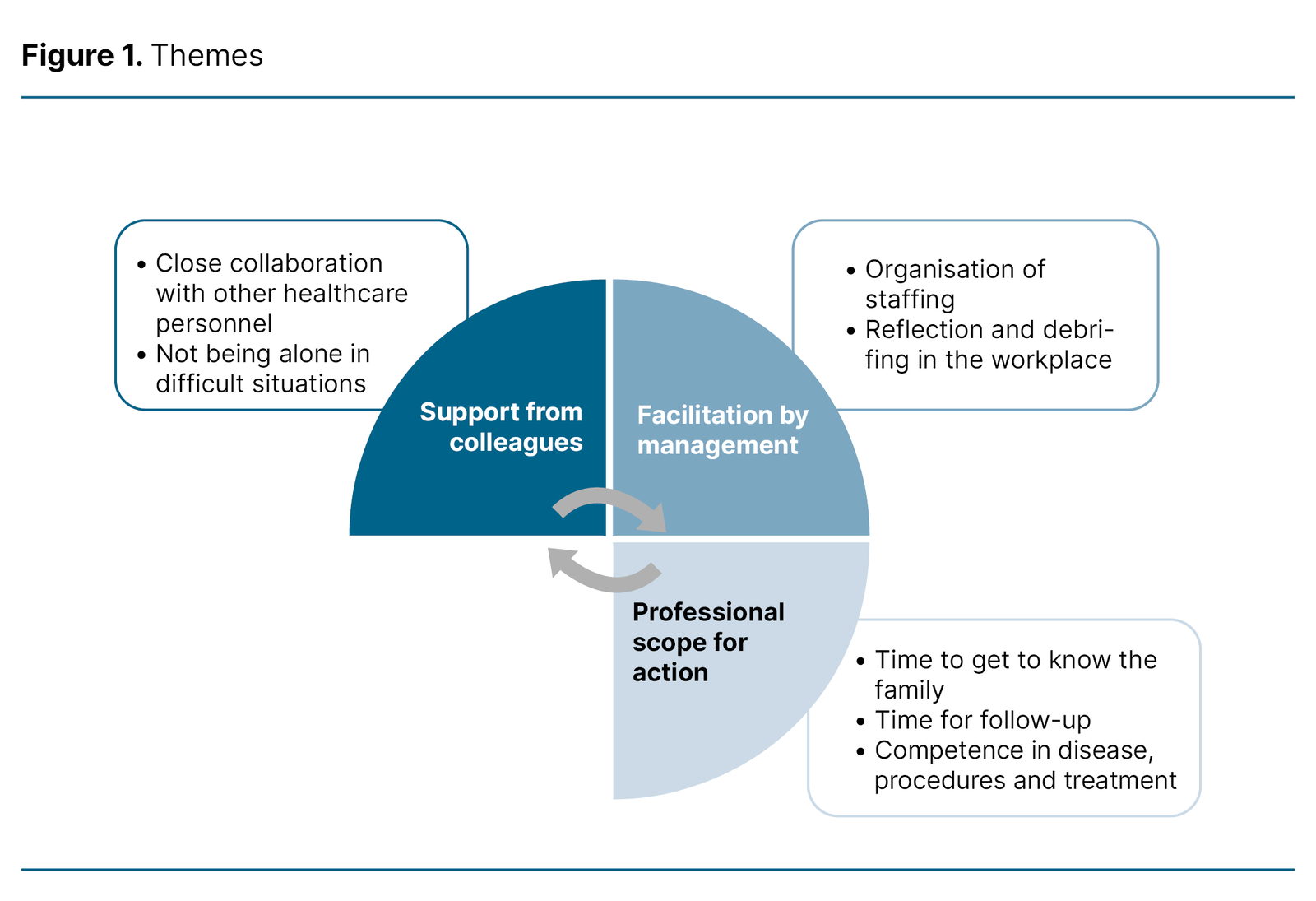
We analysed the first interview individually and subsequently compared our analyses to ensure consistency. The first author coded the remaining interviews independently. The codes were then organised into preliminary themes, which were critically reviewed and discussed. The analysis resulted in three main themes (Figure 1).
Ethical considerations
The study was registered with Sikt – the Norwegian Agency for Shared Services in Education and Research (reference number 804863). Participants were informed that participation was voluntary and that they could withdraw at any time without consequences. They provided written informed consent. Audio recordings and transcriptions were stored on an encrypted USB drive and deleted after completion of the project. The information that emerged in the study cannot be linked to individual participants or patients.
Results
The nurses in the study reported that family caregivers are crucial for facilitating a good end-of-life experience at home. They expressed a desire to support family caregivers, but often felt that they were unable to meet their needs.
The analysis resulted in the development of three themes describing what nurses consider important for better meeting the needs of family caregivers: 1) Support from colleagues, 2) Facilitation by management and 3) Professional scope for action. These themes are mutually reinforcing.
Support from colleagues
Collaboration with and support from colleagues were strongly emphasised in all focus groups. The participants described that effective collaboration with general practitioners (GPs) and hospitals, as well as sufficient information, is crucial for professional confidence and for being able to support family caregivers:
‘Sometimes you’re not involved until later in the process when the patient is already gravely ill, so you have no baseline for comparison – what were they like before, you know, you haven’t received much documentation from the hospital. Are they receiving palliative care, curative treatment, are they terminal? There’s no written information, and the patient doesn’t know themselves. It’s an incredibly difficult position to be in when you have three or four family members sitting on the sofa asking questions.’
The nurses reported that entering situations where family caregivers were often exhausted, uncertain and unfamiliar with the end-of-life phase was challenging. To provide adequate support, nurses need to be competent and have professional confidence. The nurses emphasised the importance of access to GPs and well-devised care plans, so that everyone knows what they are supposed to be doing at all times.
The participants described feeling isolated in complex patient situations where family caregivers had multifaceted needs, and where the patient and family caregiver both required support. Such situations were particularly challenging in the absence of close collaboration with the GP or when there was only one nurse on duty. Calling a colleague, sometimes outside working hours, helped them feel reassured.
The nurses described a workplace culture in which colleagues made themselves available and went to considerable lengths to support one another in such situations: ‘If you are the nurse responsible for handover, you often make yourself available if the evening shift has any questions: “Just call me, I’ll have my phone with me.”’ This practice made them feel less isolated in their role.
Facilitation by management
The participants reported that encounters with exhausted family caregivers could be challenging, particularly if the caregiver’s wishes differed to that of the patient. They said they needed time to reflect on and discuss difficult situations (debriefing) in order to process their own thoughts and emotions and to learn from these experiences.
One participant described it as follows: ‘You have to suppress your emotions in the moment, but it can be quite overwhelming. That’s why I believe it’s important to discuss it afterwards with colleagues.’ The nurses found that such conversations were often deprioritised, although they also reflected on how they could perhaps be better at initiating such discussions.
The interviews revealed differing opinions on whether management sufficiently facilitated support for family caregivers. One nurse described it as follows: ‘There are often discussions about how much time we should spend there [in the home]. At times, I feel that we have to fight a little to have this accepted,’ while another stated: ‘Management facilitates our presence when needed.’
There was consensus that low staffing levels were the reason why management facilitation was considered poor: ‘Things can change very quickly, into an acute situation, and it’s not always possible to just bring in another person at short notice.’
Participants emphasised the need for sufficient staffing in order to be able to follow up both the seriously ill patient and their family. They described a gap between meeting the patient’s needs and simultaneously supporting family caregivers, who face a challenging situation. When a patient’s condition changes rapidly, this is particularly challenging, and support from colleagues is important: ‘It also means you can quickly call on a colleague to step in. You have to help each other.’
The participants pointed out that management must organise the work in a way that enables nurses to support patients and family caregivers and to protect themselves.
Professional scope for action
Participants emphasised the importance of nurses having a high level of competence to ensure that family caregivers feel reassured that the patient is receiving good care, and to provide them with the training and support needed to cope with the situation. Nurses therefore need to be able to communicate effectively and stay up to date on relevant equipment, procedures and treatments.
Several participants noted the value of having staff with specialist expertise within the department. They stressed that nurses’ knowledge of diagnoses, disease trajectories and medication is central to creating a sense of reassurance – both for themselves and for the family caregivers. One nurse described it as follows: ‘It [competence] is also about feeling confident in what you are doing, when a family member asks questions and we ourselves are unsure what to do, how can we offer reassurance? And what do you say to reassure them and to give them the help they need?’
The participants explained that they must clarify what kind of assistance the family needs and what they wish to manage themselves. In this process, they need time to build relationships and establish trust, so that they can assess families’ needs, including when these are not explicitly expressed: ‘They don’t always realise soon enough that it’s becoming too much for them, so we then have to step in and support them and protect them by finding good solutions.’
The participants agreed that they need more time to support family caregivers, but that they have to prioritise: ‘It would be very good to have time for patients’ families, but can we have time for the other things first?’
The nurses highlighted the crucial role of family caregivers in enabling patients to remain at home at the end of life, and noted that they undertake extensive and demanding caregiving responsibilities. The study shows that in order to meet the needs of family caregivers, nurses need collegial support to feel less isolated in their role. They also need the time and competence to identify and address these needs.
Furthermore, they emphasised that management must facilitate nurses’ follow-up of family caregivers, as this is often the first area to be deprioritised when resources are limited.
Discussion
The study explores nurses’ needs when supporting family caregivers of patients wishing to die at home.
Need for collaboration
The participants emphasised that effective collaboration with family caregivers is crucial for a dignified home death. They wish to support and care for families of seriously ill and dying patients, but find that they often have to deprioritise this in their busy working day. The study confirms findings from previous research indicating that nurses often feel isolated in their role when facing complex situations, and that better interdisciplinary collaboration is needed (15–17, 27).
Close communication with GPs and the specialist health service can promote professional confidence, but the participants in this study found that access to these is often limited. Improved interdisciplinary collaboration could promote more efficient use of resources and ensure that competence is used to support the patient and their family. Advance care planning and conversations can help simplify the situation and provide reassurance for healthcare providers and patients’ families (28, 29).
Advance care planning gives patients and their families the opportunity to express their needs. Palliative care plans typically outline what should be done and who should be contacted in different scenarios. This provides reassurance for the patient, their family and the healthcare personnel.
Ethical reflection and discussions on challenging situations, in which nurses are able to express their thoughts and emotions, are important. It is also essential to evaluate situations together and learn from experiences. However, participants reported that this type of professional follow-up was deprioritised due to the pressured working environment.
Alme et al. (30) confirm that ethical reflection in the workplace can reduce stress and support the recruitment and retention of healthcare personnel. Prioritising this form of staff support can benefit managers, employees, patients and family caregivers alike.
A key finding is the extent of collegial support, including outside working hours. This finding indicates a strong and supportive collegial culture, but one that may also mask a need for greater professional and organisational support. When informal support compensates for resource shortages, there is a risk that management will fail to identify needs requiring action at the organisational level. This may have implications for the quality of patient care and the support provided to family caregivers.
Competent personnel
Staff competence is crucial for providing a professional standard of care. This finding is consistent with existing research showing that further education and skills enhancement help to increase professional confidence (6, 15–17, 31). Politicians believe that family caregivers should be able to expect assistance and support from nurses (3, 8, 10, 22, 32).
An evaluation of the Coordination Reform in the Norwegian health service shows that local authorities do not have sufficient competence to carry out the additional clinical responsibilities brought about by the reform, and that not enough has been done to increase their staff’s competence (33). This study confirms the importance of adequate competence and highlights the need for skills enhancement in order to support patients and their families.
Official Norwegian Report NOU 2023:4 describes ‘an increasing gap between public expectations regarding the scope, quality and accessibility of health and care services, and the health service’s ability to meet these expectations, as a result of workforce and financial constraints’ (34, p. 15).
Responsibility for organising and funding health services rests largely with local authorities, and the provision of home care services depends on local finances and political priorities. The participants emphasised the need for skills enhancement but noted that time and resources are rarely allocated for such initiatives. It is therefore relevant to question whether it is possible to meet the complex needs of family caregivers given the current organisational framework and limited resources.
Nurses’ role as key actors
Family caregivers need support and guidance and must know that they can access healthcare personnel when they need help (11, 13). Our study shows that nurses need time to get to know the family and remain available to provide support for family caregivers. The nurses emphasised that although management aims to facilitate the follow-up of family caregivers, the available resources are often insufficient.
As resources become scarcer, time also becomes more limited, and new solutions are needed (9). Time pressure affects the quality of care and patient safety and contributes to compassion fatigue among healthcare staff (14, 15). A positive working environment and clear distribution of resources can help mitigate this, and both staff and management can contribute constructively even when resources are limited (14).
Politicians emphasise that family caregivers should be followed up (7–10). To support family caregivers as the essential resource they represent, their role must be recognised and their follow-up prioritised at all service levels. Support for family caregivers must therefore be explicitly recognised as a defined task within the community nursing service.
Managers are responsible for meeting a range of needs by ensuring access to appropriately qualified staff while also maintaining cost-effectiveness. Nurses must participate in discussions about priorities in clinical practice, both at the political and local level. When community nurses are assigned too many tasks, they must clearly communicate the implications of this. In order for nurses to properly support family caregivers, they themselves must receive adequate resources and support.
When family caregivers do not receive the support they need, this can increase their stress, uncertainty and social isolation. This can lead to a sense of isolation in the caregiving role, which in turn can affect their health and the quality of care they provide for the patient (11, 12, 14). A systematic approach to better resource allocation and collaboration may therefore not only improve conditions for healthcare staff, but also ensure that family caregivers receive the support they need and deserve.
Strengths and limitations of the study
One advantage of focus group interviews is that the interaction between participants can yield insights that may not emerge in individual interviews (24). A disadvantage is that group dynamics can influence participants’ responses (35). The interviewer therefore used follow-up questions to elicit a range of perspectives and emphasised that all experiences were equally valid and important to share. The number of participants can also impact on the findings, as small groups may yield fewer narratives and less variation in responses (24).
The participants had varied experience and backgrounds, which resulted in a rich dataset. Two intellectual disability nurses also participated in the study. They took part in the focus group interviews, but it is not possible to identify their input. Participant interaction in the interview that included the intellectual disability nurses did not differ from the other interviews.
A potential limitation is that the interviewer had a professional relationship with some of the participants.
Conclusion
Family caregivers of patients who wish to die at home are often in a challenging situation and carry a considerable caregiving burden. To adequately support family caregivers, nursing care must be organised in a way that gives nurses sufficient time and space to build relationships, establish trust and respond to the family’s needs. Nurses must be up to date and competent, and debriefing and ethical reflection must be priorities. Flexibility and continuity in staffing are necessary for patients, family caregivers and staff alike.
Interdisciplinary collaboration and effective planning are essential for nurses’ professional confidence in complex situations. They must be well informed and supported by colleagues in order not to feel isolated in their role. While collegial support outside working hours is positive, it also masks an unmet need.
According to national clinical guidelines, support for family caregivers should be a priority, but the nurses in the study found this difficult due to the resource shortage. It is important that nurses communicate to employers and policymakers that adequate support for family caregivers is impossible when workloads are excessive and capacity is limited.
The authors declare no conflicts of interest.
Open access CC BY 4.0
The Study's Contribution of New Knowledge




Comments